
Classroom management rarely breaks down because of the children. It fails when the environment cannot support their independence. Walk into a flourishing Montessori classroom. You will notice something deep at work. Children move with a clear purpose. Transitions happen with quiet flow. The teacher observes more often than she directs. This harmony is no accident. It is built with care through the thoughtful choice and use of Montessori materials.
This goes beyond learning numbers or colors. It is about how Montessori materials for teachers in the USA act as silent partners in guiding the classroom. They shape behavior, reduce friction, and make order feel natural, not forced.
Why Montessori Materials Are Behavioral Anchors
A Montessori environment guides behavior through design, not discipline. The materials themselves teach patience, precision, and self-control.
When materials are:
Self-correcting – they give immediate, wordless feedback.
Limited in number – they naturally teach patience and waiting for a turn.
Clearly organized and reachable – they build independence and order.
Perfectly sized for small hands – they show respect and thoughtful intention.
The classroom starts to run itself. Teachers correct less and observe more. This change transforms the feeling of the entire room.
Practical Life: The Foundation of Inner Discipline
At first look, Practical Life shelves seem simple. They hold works for pouring, spooning, folding, and polishing. Yet these activities form the cornerstone of classroom management.
They build order by:
Teaching childrenhow to wait for a turn, for a material, for help.
Creating responsibility through the complete work cycle: choose, use, clean, return.
Offering achievable challenges that grow concentration and self-control.
A child mastering the slow, careful pour of water is practicing more than a life skill. They are growing the focus needed for all future learning. This inner discipline directly leads to peaceful classroom dynamics.
Essential tools for teachers include:
Pouring sets with trays that contain spills.
Dressing frames are ordered from simple to complex.
Real, child-sized cleaning tools that invite care for the space.
These materials replace aimless wandering with purposeful movement. They help regulate the room from within.
Sensorial Materials: Architects of a Calm Nervous System
Too much stimulation often causes classroom chaos. Sensorial materials Montessori Sensorial materials are designed to bring order to sense experience.
Cylinder blocks, color tablets, and sound boxes each isolate one quality: size, color, or volume. This isolation lets children refine their senses without feeling overwhelmed.
Teachers see fewer disruptions when:
Sensorial works follow a logical, developmental sequence.
Materials are complete, undamaged, and beautiful.
Every item has a specific, predictable place on the shelf.
This is consistency that creates a strong feeling of security. Children who feel safe in their space demonstrate that safety is reflected in relaxed and attentive behavior.
Mathematics Materials: Transforming Frustration into Mastery
Frustration often triggers acting out. Montessori math materials prevent this by making abstract ideas something a child can touch and see.
Golden Beads, Number Rods, and the Stamp Game let children see and feel quantity. Mistakes become visible puzzles to solve, not reasons for shame.
For classroom management, this means:
Children stay deeply engaged for long periods.
Emotional meltdowns over “hard math” drop sharply.
Self-correction builds resilience and confidence.
It is no wonder that in well-prepared classrooms, math work often becomes the quietest, most focused time of day. Choosing the right Montessori materials for teachers in the USA is vital here. Poor math materials can quickly shatter confidence and stir up classroom friction.
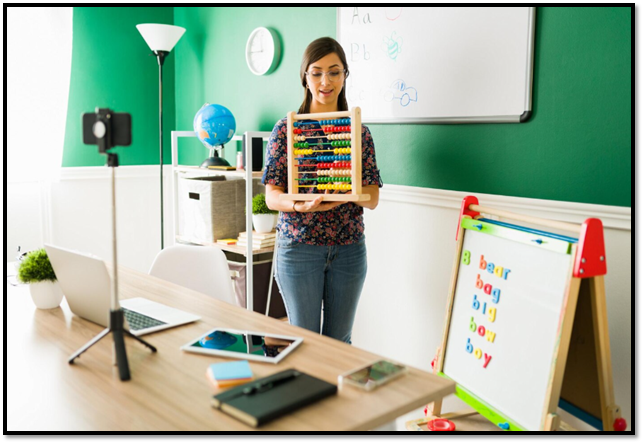
The Classroom Itself: Furniture and Layout as Management Tools
Management is not only about lessons. It is about space. The physical layout of a Montessori classroom acts as a primary guide for behavior.
Low, open shelves; defined work rugs; child-sized tables and chairs; these elements prevent crowding. They create natural pathways for movement.
Most importantly, they remove the need for constant adult direction. When materials are visible and accessible, children do not ask, “What can I do?” They choose.
The power of choice reduces struggles and nurtures inner autonomy.
The Invisible Architecture of Peace
True Montessori classroom management is most powerful when you cannot see it. During morning work, you might see a child pause. They watch another using the Trinomial Cube, then quietly fetch a mat to prepare for their turn. The material created the pause, not the teacher.
The right materials do the quiet, daily work of guiding behavior. This leaves the teacher free to connect, observe, and guide gently. The children respond not to commands, but to an environment that trusts and supports them.
This delicate balance, where teacher, child, and environment work as one, is what enduring suppliers like Bruins Montessori have supported for decades. Through genuine, well-crafted materials, they assist teachers in creating classrooms where discipline is developed internally, and learning takes place in a calm and intended environment.
