
A four-year-old sits quietly at a low shelf, hands busy and eyes focused as small golden beads slide from one place to another. The activity relies entirely on hands-on materials rather than worksheets or screens, yet something important is taking place. This is where abstract math begins to make sense, long before a child knows how to explain it.
Montessori bead material has been used in classrooms across the USA for decades, and not by accident. It solves a real learning problem. Young children struggle when numbers stay stuck on paper. Beads change that.
This blog breaks down how Montessori bead material supports early learning, why educators trust it, and how Montessori Materials USA fits into real classrooms today.
What Montessori Bead Material Really Teaches
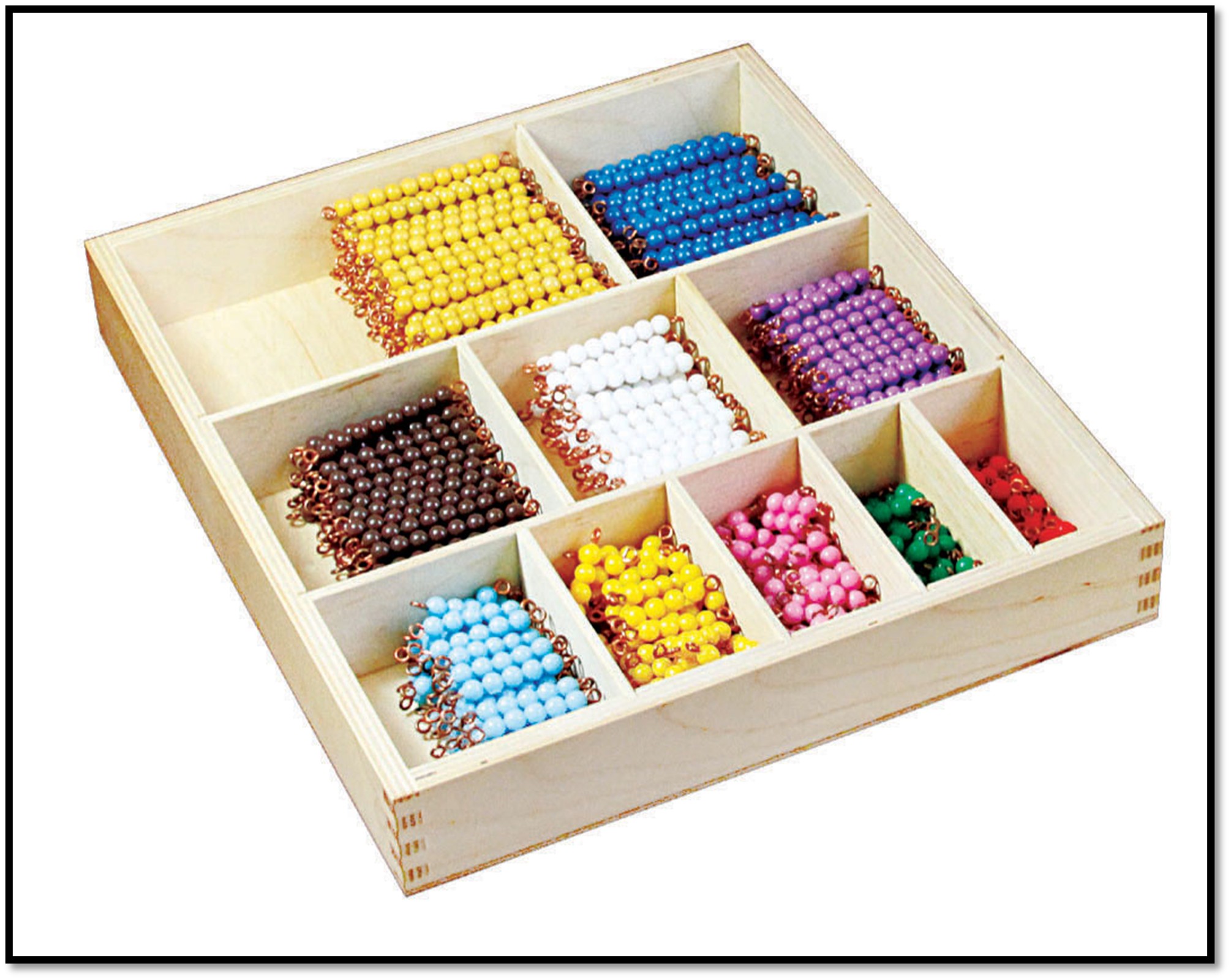
Montessori bead material is not just about counting. It is about structure, logic, and confidence. Each bead has a role. Each chain, square, or cube shows quantity in a way that hands can feel and eyes can follow.
Core learning outcomes include:
• Understanding place value through physical grouping
• Seeing the difference between units, tens, hundreds, and thousands
• Building early arithmetic skills without memorization
• Developing fine motor control alongside math concepts
Research on concrete learning tools shows that children grasp number relationships faster when they manipulate objects rather than symbols alone. Montessori bead material fits squarely into this approach.
Why Beads Work for Early Learners in the USA
Early childhood classrooms in the USA are diverse. Children arrive with different language levels, attention spans, and prior exposure to numbers. Bead material levels in that field.
The learning process stays consistent:
1. The child touches and counts individual beads.
2. Beads are grouped into bars, then squares, then cubes.
3. Quantity becomes visible, not theoretical.
4. Symbols and equations come later.
This sequence aligns with how the brain develops in early childhood. Cognitive studies from math education programs show that tactile experiences strengthen long-term retention, especially between ages three and seven.
Real Classroom Impact
In Montessori classrooms, using bead material daily, teachers often notice the same shift. Children stop guessing. They check their work. They correct themselves.
A lower elementary guide in Texas shared that students using bead material showed stronger place value understanding compared to peers taught with worksheets. Mistakes became learning moments rather than frustrations. Children could see why an answer worked or failed.
That self-correction matters. Montessori bead material removes constant adult approval. The material itself tells the truth.
Montessori Bead Material and Skill Transfer
One concern educators raise is whether hands-on learning transfers to paper-based math. With bead material, the answer is yes, when used correctly.
The transition usually follows this pattern:
• Physical manipulation with beads
• Verbal explanation of what is happening
• Symbolic representation using numbers
• Written equations
By the time a child reaches paper, the concept is already understood. This reduces math anxiety later on, a documented issue in traditional early education settings in the USA.
Choosing Quality Montessori Materials USA
Not all bead material is equal. Precision matters. Beads must be uniform. Chains must align correctly. Color consistency helps reinforce meaning.
Educators in the USA often look for:
• Durable metal beads with smooth edges
• Accurate proportional sizing
• Complete sets that support long-term progression
• Materials aligned with authentic Montessori standards
Low-quality sets lead to confusion. High-quality Montessori Materials USA support years of consistent use across multiple classrooms.
Best Practices for Using Bead Material
Experience shows that bead material works best when it is:
• Introduced slowly, not all at once
• Used regularly, not as a reward activity
• Stored neatly so children can access it independently
• Paired with observation rather than constant instruction
Teachers who step back often see more learning. The material carries the lesson.
Why Montessori Bead Material Still Matters
Educational trends change quickly. Tablets replace books. Apps replace manipulatives. Yet Montessori bead material remains because it solves a fundamental problem. Children need to feel numbers before they can trust them.
In early learning environments across the USA, bead material continues to support independence, accuracy, and deep understanding. Those outcomes do not age out of relevance.
Why Montessori Beads Build Understanding
Montessori bead material supports early learning by turning numbers into something real, stable, and understandable. It builds math confidence from the inside out and prepares children for abstract thinking without pressure.
Schools and educators looking for reliable Montessori Materials USA continue to rely on proven tools from Bruins Montessori to support that journey
